AI Retail Theft Detection: Catching Shrink in Real Time at Under $100 a Store
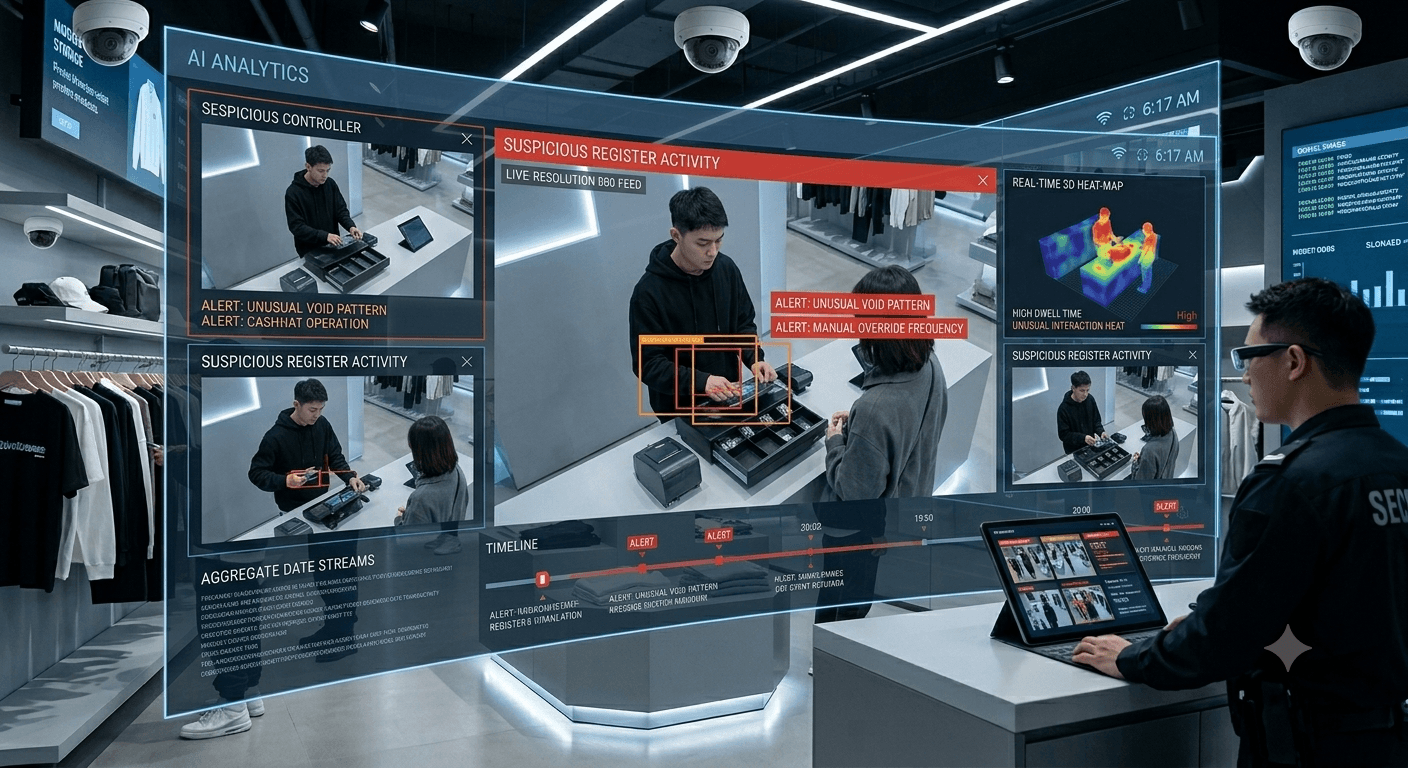
Retail theft is no longer a rounding error on the balance sheet. U.S. retailers lost an estimated $90 billion to inventory shrink in 2025, and the National Retail Federation's 2025 report found shoplifting incidents climbed roughly 18% in a single year. Crucially, internal and external theft together drive nearly two-thirds of all shrink - which means a serious loss-prevention strategy has to watch both the sales floor and the register.
The problem most retailers run into: the cameras are already there, but nobody can watch them. Footage gets reviewed after the loss, if at all. Our client wanted to flip that - to turn passive CCTV into an active, real-time detection layer that flags theft as it happens, cheaply enough to deploy across every store.
The Challenge: Turn Existing Cameras Into a Live Detection System - Without Blowing the Budget
Traditional loss prevention forces a choice between three bad options: hire more floor staff, pay for a manned monitoring center, or simply absorb the loss. All three scale terribly. A chain with hundreds of locations can't put a trained loss-prevention officer behind every camera feed.
The client's existing CCTV captured everything and surfaced nothing. They needed a system that could:
- Detect customer theft - concealment of items, suspicious handling - in real time.
- Detect employee theft at the point most internal loss occurs: the register.
- Deploy across many stores on commodity hardware and existing cameras, at a cost low enough to roll out everywhere rather than to a pilot handful.
The Solution: Real-Time AI Video Analytics for Loss Prevention
We built an AI-driven detection layer that sits on top of the store's existing camera infrastructure and analyzes feeds continuously, raising an alert the moment a high-risk event is detected - rather than leaving it for a post-incident review that rarely happens.
The architecture targets the two loss vectors that account for the majority of retail shrink:
Customer Theft - Concealment & Suspicious-Behavior Detection
The model watches the sales floor for the behavioral signatures of theft: items being concealed on a person or in a bag, unusual dwell-and-conceal patterns, and movement that deviates from normal shopping behavior. When the pattern crosses the risk threshold, staff get an instant alert tied to the specific camera and timestamp - early enough to intervene, not just document.
Employee Theft - Register Monitoring
A large share of shrink never reaches the sales floor; it happens at the till. The system monitors point-of-sale activity for the patterns associated with internal theft - voids, no-sale events, and register behavior that doesn't reconcile with what's physically happening on camera - surfacing them for review instead of letting them disappear into the daily transaction noise.
Efficient, Scalable Deployment
The entire system runs on a cloud-based, scalable architecture designed to plug into existing cameras rather than requiring a hardware overhaul. That design choice is what makes chain-wide rollout realistic: the same pipeline that protects one store protects five hundred, with no per-site re-engineering.
The Results
85% capture rate.The system detects 85% of theft incidents, measured against a working benchmark of roughly 20 incidents per store per day - converting events that were previously invisible into actionable, real-time alerts.
Under $100 per store, covering 20 cameras.By running on existing camera infrastructure and a cloud architecture, the cost per store stays low enough to deploy across an entire fleet - not just a flagship location.
From passive footage to active prevention.Cameras that once only recorded losses now flag them as they happen, shifting loss prevention from forensic clean-up to real-time intervention.
Why It Matters
As theft losses and organized retail crime keep climbing, the retailers pulling ahead aren't the ones buying more cameras - they're the ones making the cameras they already have intelligent. Real-time AI detection that covers both customer and employee theft, deployable across a fleet for the price of a few coffees per store, turns shrink from an accepted cost of doing business into a problem you can actually act on.